Life and career
Saving di Cione’s Crucifixion
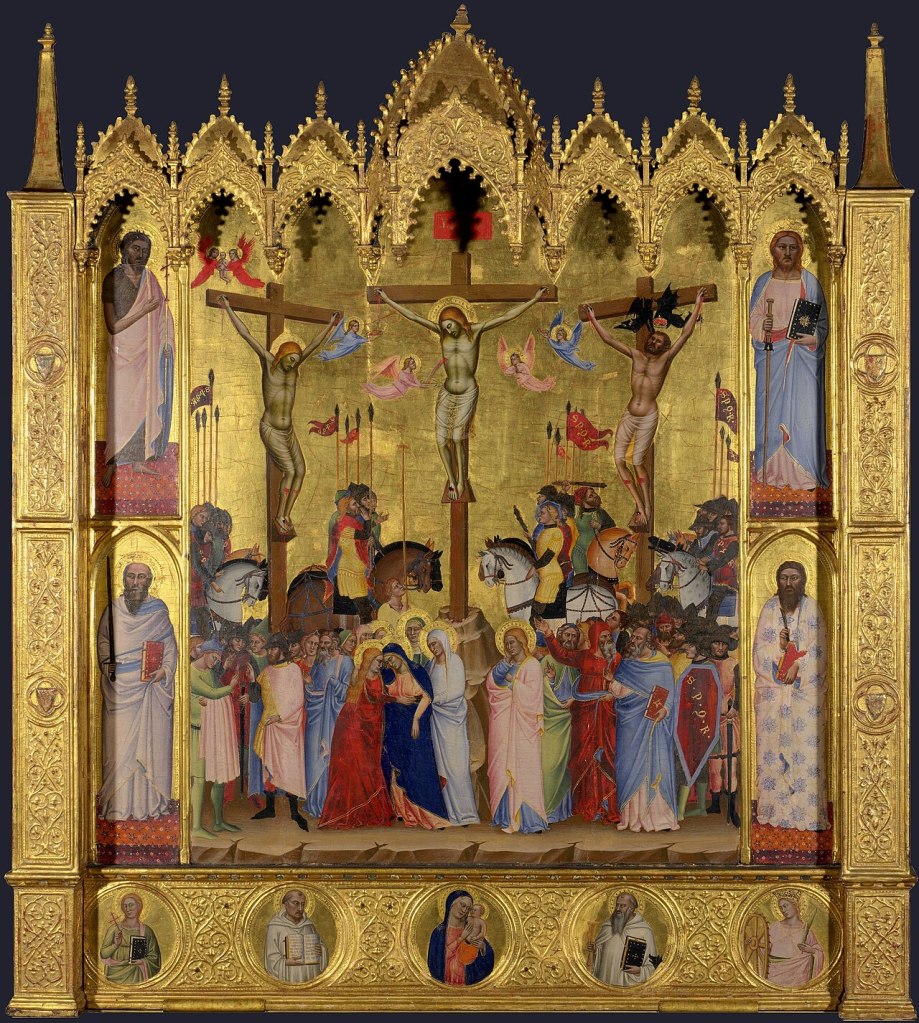
When employees of the National Gallery’s photographic department arrived at work on the morning of May 29, 1989, they discovered, to their horror, that the 14th-century gilded altarpiece of The Crucifixion by the Italian painter Jacopo di Cione was lying in two large sections on the floor. Its original Florentine frame, with a decorative gilded canopy, had been shattered into hundreds of fragments. The 154cm panel, which had been brought out for the gallery’s November exhibition Art in the Making: Italian Painting before 1400, had fallen from its easel overnight and on to a camera and tripod. It was difficult to apportion blame to any single member of staff, who were said to be under pressure to move more paintings into the exhibition than at any other time. But according to the minutes written up for the trustees, “the decision to clamp the picture sideways on the easel could be seen to have been mistaken. It had been taken without reference to the most senior conservation staff, but such reference was not required… no one had appreciated just how fragile the canopy was”.1
The gallery’s director, Neil MacGregor, informed the trustees that the incident was “probably the most serious non-malicious damage in the gallery’s history, [and]&nbs p; particularly regrettable as the altarpiece had one of the few original 14th-century frames”. The truth only came to light in 2016, when The Art Newspaper went through the recently published gallery trustees’ minutes. At the time, a distraught MacGregor asked John England, Head of Framing, if he could fix it — and do it discreetly.
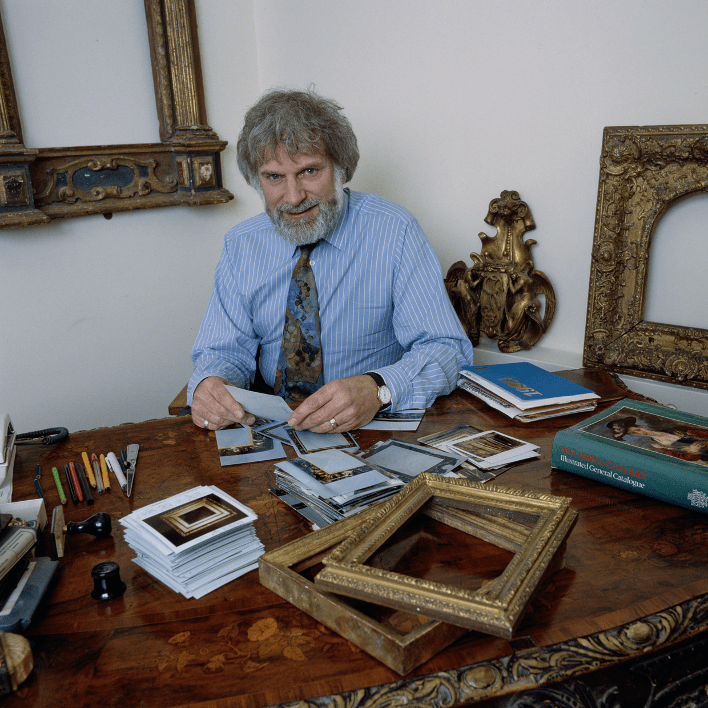
England had been working for the gallery for 12 years, and aside from conservation, gilding and carving was work that he cherished. After repairing the panels, he embarked on the painstaking process of reconstructing the multitude of tiny fragments that comprised the canopy, and completing the restoration to the bole and gilding work, which made up most of the surface of the artwork. It took several months, but by November the masterpiece was returned to its former glory and ready to be exhibited. As a consequence of the secrecy surrounding the disaster, England’s role in the rescue of the Di Cione was never officially recognised and, indeed, he never sought it; he saw it as merely part of his job. His skill in undertaking the restoration was so complete that nobody outside the Gallery was ever aware of what had happened.
Goldsmiths and the ‘old school tie’
The rescue of the di Cione was not to be the only invaluable contribution England made to the Gallery and the care of British cultural treasures. However, he had begun life in inauspicious circumstances. Born in 1941 in Cardiff, his pregnant mother, Ivy, had been evacuated during the Second World War from their modest home in St Quintin Avenue, North Kensington, London. His father, Frank, worked as a wartime commis chef before becoming a clerk in the civil service. His earliest memories were of playing on bomb sites and marvelling at staircases reaching up to nothing. The house was, however, close to Portobello Road. And, for England, the shops and stalls overflowing with objets d’art gave him his first taste for craftsmanship.
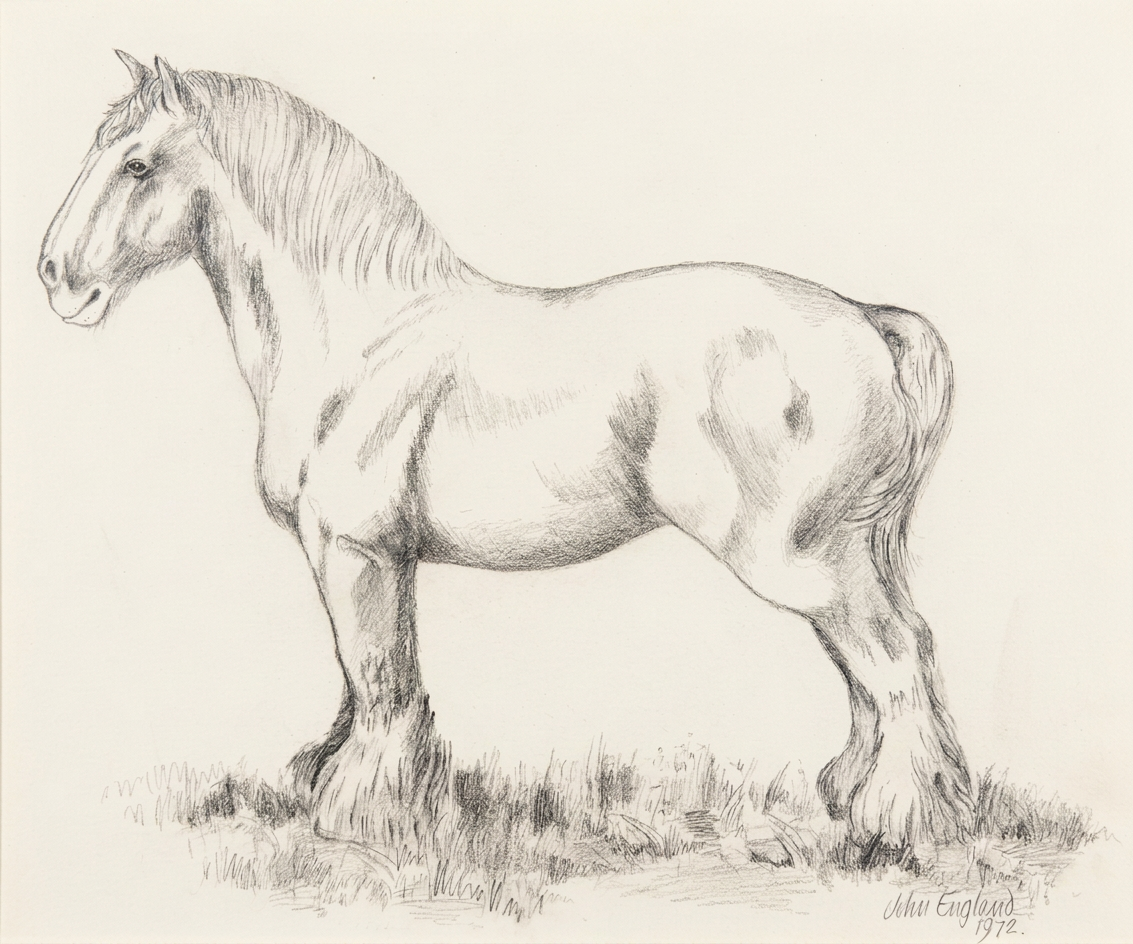
The second of four children, England was educated at the Christopher Wren School in Shepherd’s Bush. Though not academically inclined, he excelled at art and went on to Goldsmiths College in New Cross, southeast London, to study for a diploma in painting. With Goldsmith’s emphasis on draftsmanship and its reputation for the Goldsmith’s School of etchers, such as Graham Sutherland,2 England’s own skill for capturing form, detail and character became quickly evident in his figure and portraiture drawing. He quickly also developed a sense of colour, which he relished applying to pictures of parks (including Chiswick Gardens) and other landscapes.
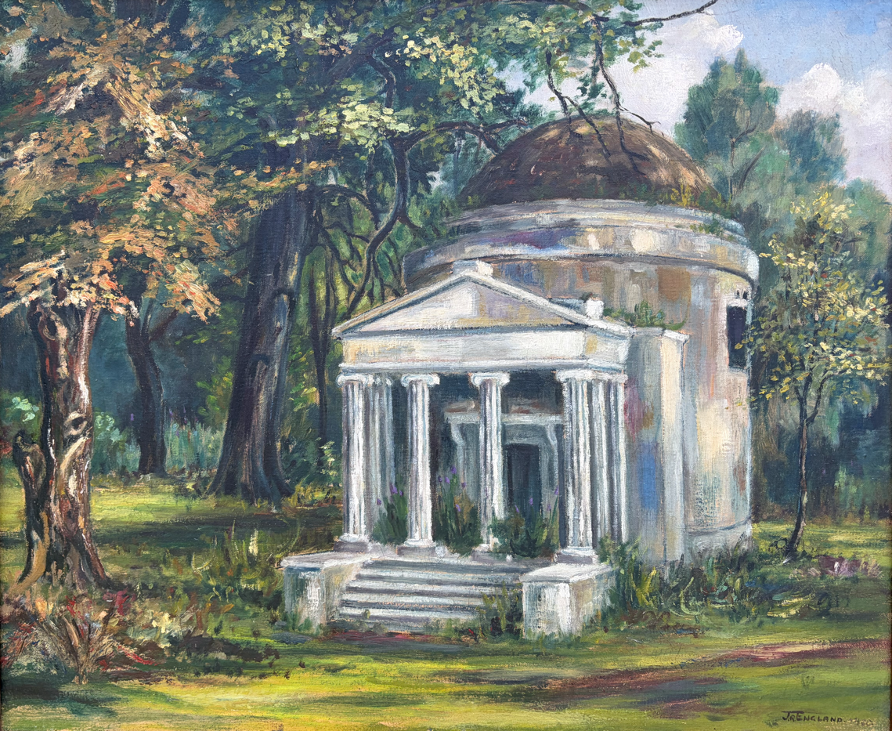
Sadly, due to family exigencies, it was suggested by England’s parents that he leave before completing the course, because they needed him to bring in money. England made an early inquiry to the National Gallery — as an art student he had spent many weekends strolling through its galleries and admiring the works of Constable, Turner and the Dutch, Italian and Spanish Old Masters. However, it was the early 1960s and he was bluntly told that he lacked “the old-school tie” to work at such an esteemed establishment. He instead found employment in lithographic companies in central London, where he took the opportunity to flirt briefly with the modernist style popular at the time.
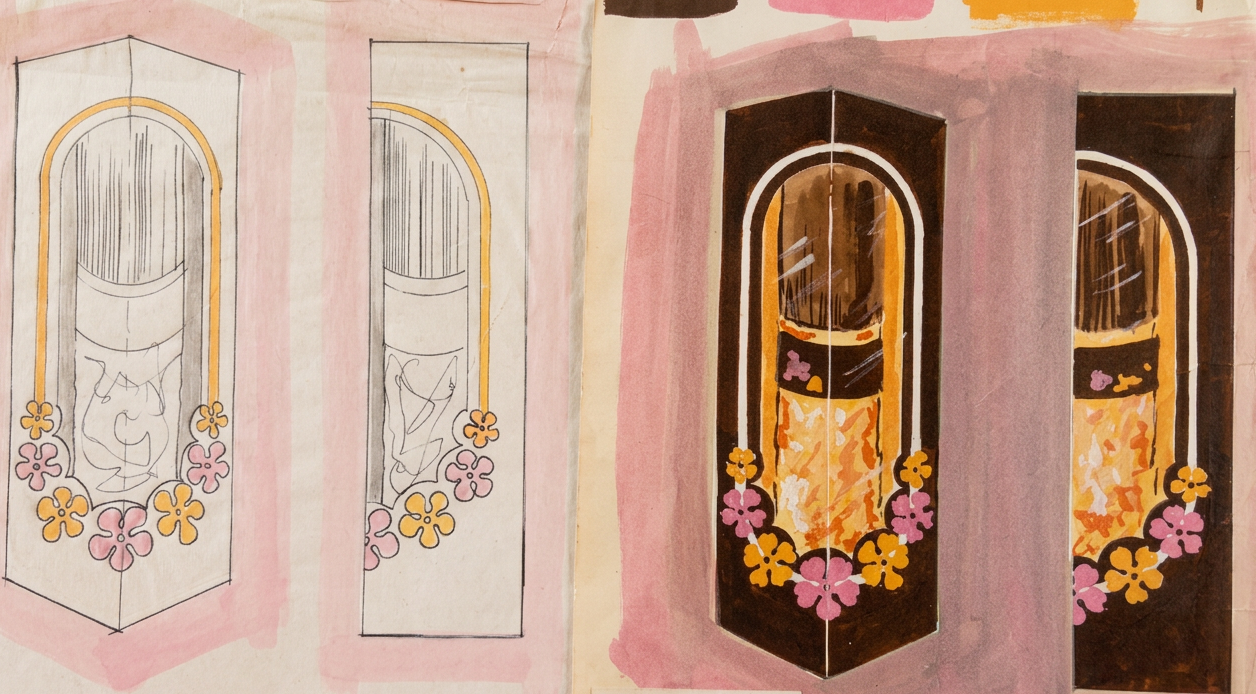
Within a few years, having worked his way up to manager, England swapped his work in the printing industry for freelance employment in graphic design, where his designs included the packaging for Eylure false eyelashes, Tabac aftershave and French Almond, which remain classics of the 1970s fashion era.
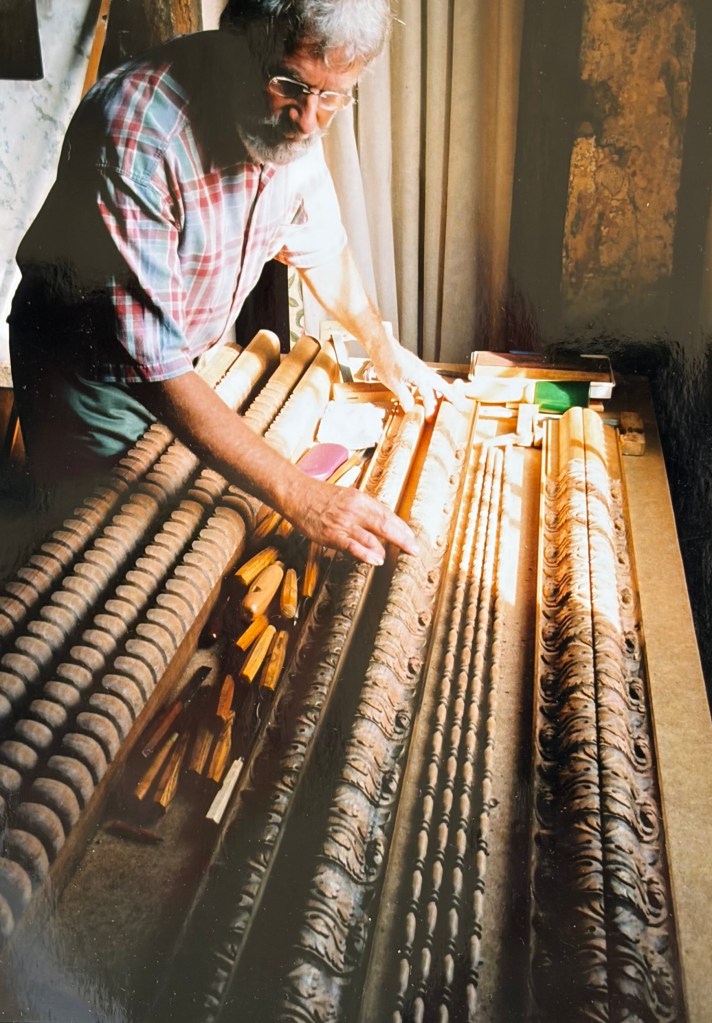
When recession hit in the 1970s, the freelance world looked precarious and John realised it was time to find a more reliably salaried position. He decided to try his luck, once again, at the National Gallery. This time he simply climbed the steps of the neoclassical building in Trafalgar Square, and rang the doorbell. This time, in 1977, the response was more positive, and he was hired to fill a vacancy as a technician in the framing department. While the role initially required him, as he put it, to “sweep the floors”, before long he had approached the head of framing to enquire about carving and gilding. He was met with encouragement, and turned out to be exceptionally good at the craft, showing a sculptor’s eye to envisage a three-dimensional form from a piece of wood (usually oak, lime or poplar) even before he began carving – “I am completely, self-taught”.3
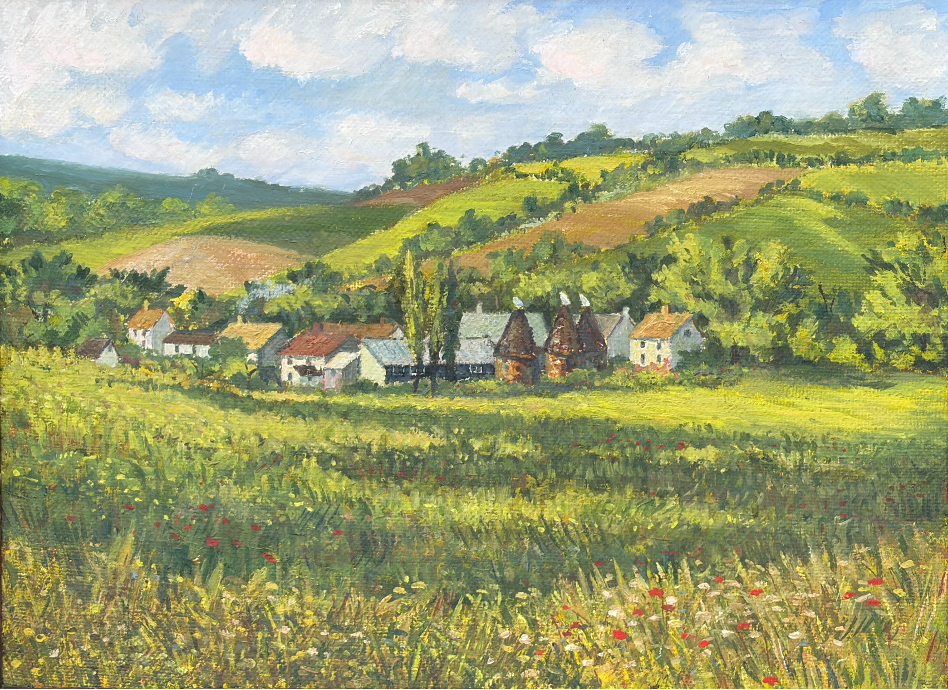
He came to the attention of Sir Michael Levey, the National Gallery director, and, within two years was made head of framing. It was 1978 and he would stay for another 23 years, retiring in 2001. It was upon joining the Gallery that England had to turn from his principal interests in drawing and painting, to carving, having produced his last oil paintings, of Chiswick Park, Natts Valley in Kent and a second painting of Lamorna Cove. He also exhibited carvings and etchings at National Gallery Staff Exhibitions, which ran annually for a number of years.4
National Gallery years
In his over two decades as head of the department, England transformed it from a framing workshop to a centre of excellence for conservation research and practice, including cataloguing all the gallery’s frames in the 1990s. In doing so, he fostered a generation of framing conservators. He also led the way in bringing more women into the field.5 The team, where they could, used period frames from the Gallery’s own archive. “Our policy is to find an antique frame if we can”,6&n bsp;but when none was available England faced the almost impossible task of finding a frame of the right size, colour and shape, which, like Cinderella’s slipper, also had to fit.7 “It is a very slow process. There is so much to do, I am lucky if I buy six or seven frames a year and I probably have time to make only two. Early Dutch and German frames are getting impossible to find. We had a terrible hunt for one for Holbein’s relatively small Lady with a Squirrel.”8 In such cases, England would typically head to one of the leading frame auctions, often returning on foot across London with renaissance structures hanging casually off his shoulder. Some frames were found by chance, as frame dealer Rollo Whately recalls:
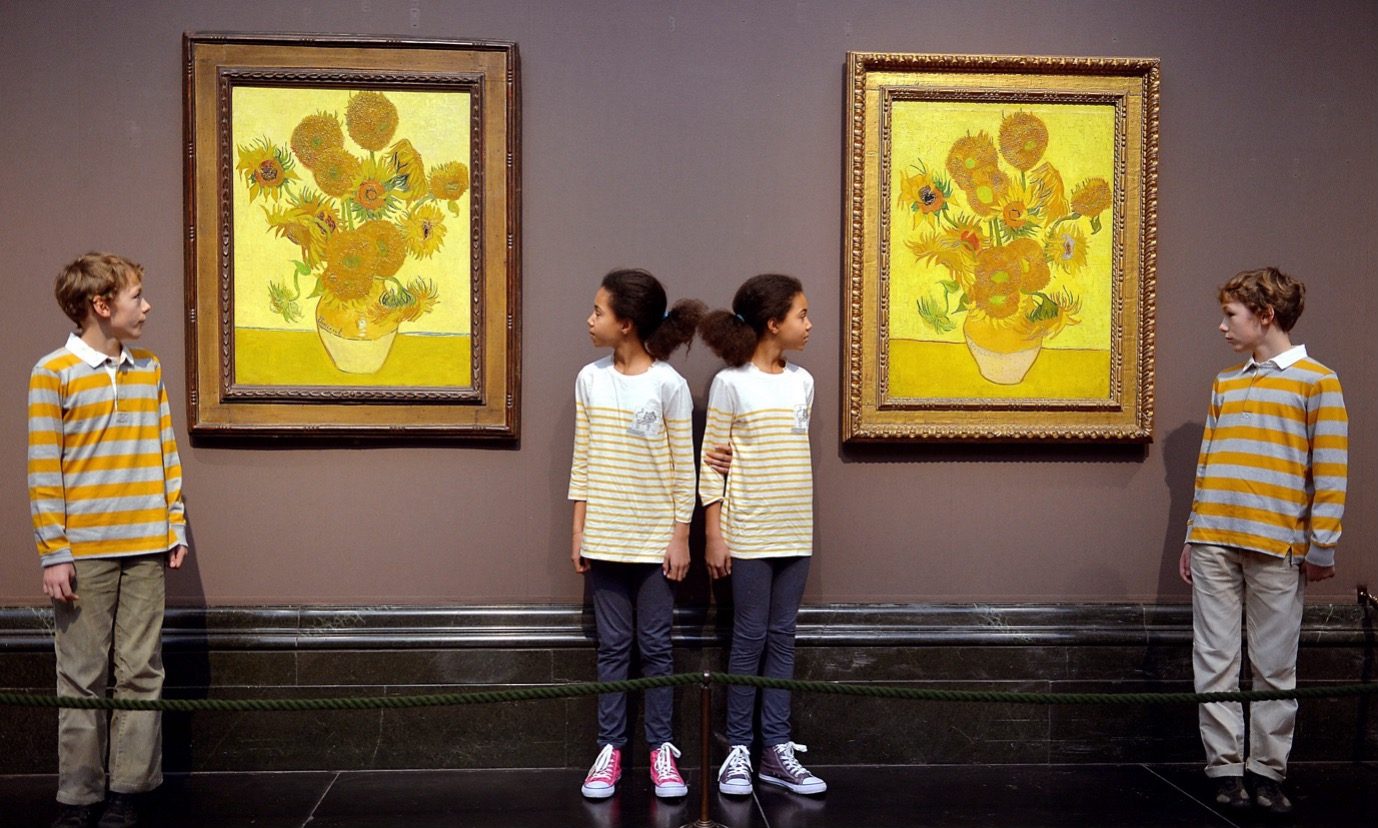
“I bought the frame on the left … An Italian painted and part silvered frame, it was one of the first I ever sold to the National Gallery and came from one of the closing down sales of Paul Levi – I remember buying it at Christies in South Kensington. John England, then head of framing at the National Gallery, a nice gentle man, long ago retired, spotted it hanging in the window of the studio (in Old Bond Street then) and wondered if it would fit the Sunflowers. I think it must be the most ‘famous’ painting that I have ever been involved with.”9
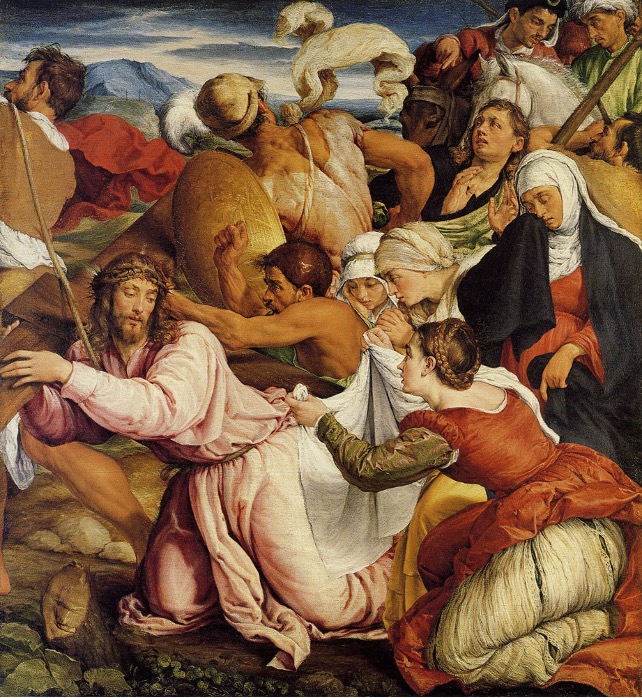
Otherwise, the department made the frames from scratch in the style of the period. For example, the reproduction 17th-century Cassetta frame for Giampetrino’s Christ Carrying the Cross, “I found a frame that was perfect, but it was the wrong size”.10 It would be a ‘cardinal sin’ to cut such a frame to size and so he copied it – hand-carving the moulding, copying the joints, and using 18-carat gold powder for the decoration – but in reduced dimensions. Among those that they worked on were the frames for Diego Velazquez’s Philip IV,11 Sassoferrato’s The Virgin in Prayer, Jacopo Bassano’s The Way to Calvary, two Ghirlandaio Madonnas, Marco Zoppo’s Saint and Bassano’s Good Shepherd. John also undertook the gilding and sgraffito work on the 1992 restoration of the Wilton Diptych, the pre-reformation English masterpiece that, together with the di Cione, is arguably the gallery’s jewels in the crown.
Other projects were more unconventional. When the National Gallery held an exhibition titled Acquisition in Focus: Rubens: Samson and Delilah (19 January 19 to 20 March, 1983), organized to showcase the painting shortly after the Gallery acquired it in 1980, John was tasked with recreating the artwork’s original fireplace setting.
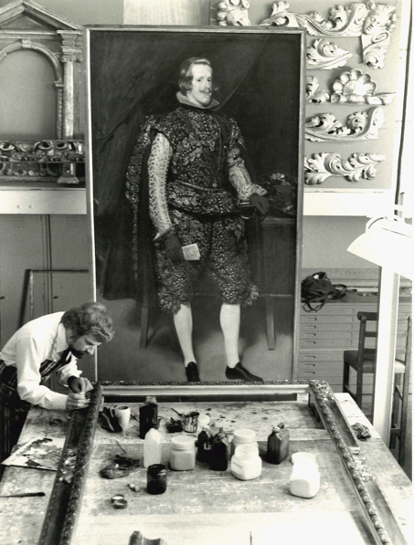
England’s expertise also made him a popular figure with the Gallery’s series of Artists in Residence during the 1980s and 1990s, who included Maggie Hambling and Hughie O’Donoghue; as well as those of the Associate Artist’s Scheme,12 who included Paula Rego, Ana Maria Pacheco and Peter Blake. Per Blake:
“I wanted to work on [the Madonna and Child] with John England, who is the head of the framing department at the gallery. He has made many of the frames in the gallery but can’t of course be credited when the frame is supposed to be, let’s say, a 16th-century Spanish one. … He designed a magnificent frame for my National Gallery Madonna, but making it would have taken too much of his time, which was disappointing. As a consolation, John found a beautiful early-17th century Italian frame, dark and battered and sombre that fits my painting perfectly. It adds that note of sobriety that I wanted to achieve and I find it both exciting and humbling to see my painting in this very special frame.”13
For the love of beautiful things
England’s craftsmanship was not confined to the studio or the Gallery. Indeed, the very first project he embarked on after retirement was the making of another frame for a gallery masterpiece. This time, Jacopo Bassano’s The Way to Calvary. However, in 1987 England had purchased a 15th-century grade II listed house near Sevenoaks, Kent, which was to take up many of his weekends as he restored inglenook fireplaces, medieval doorways and beams.
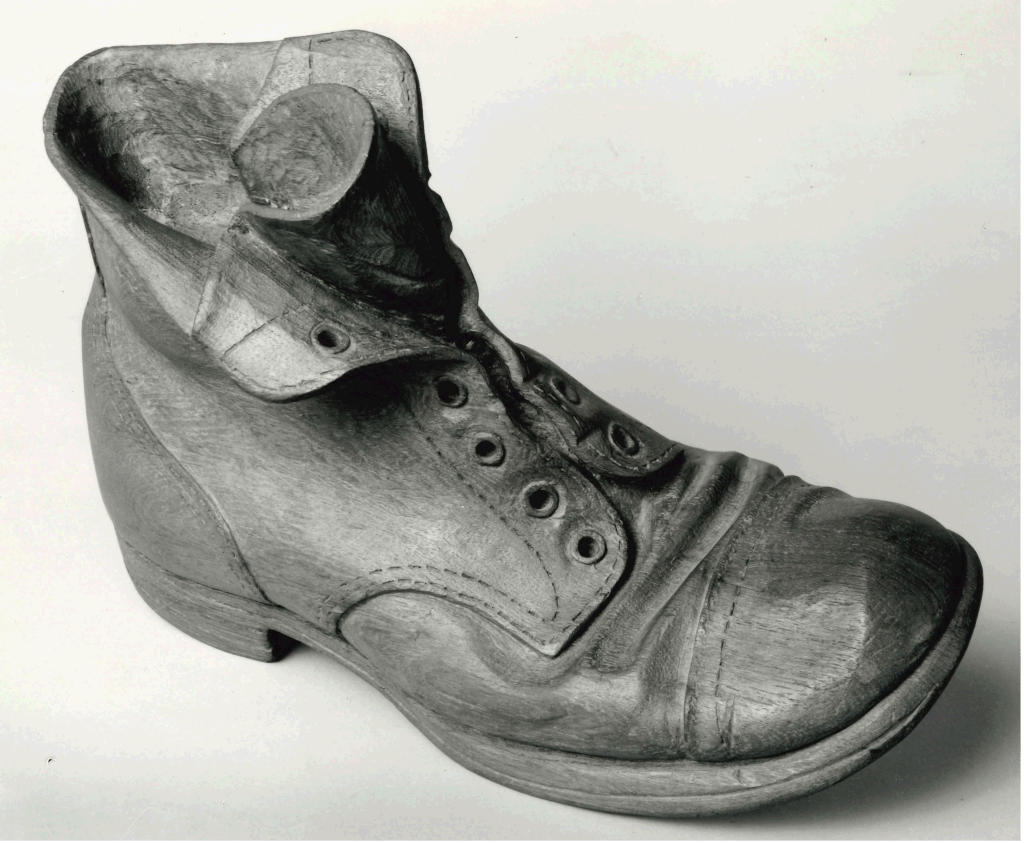
Later on England also began to design and make carved oak furniture. Pieces included coffee tables, stools and dressers. He also created his own figure carvings and mirror frames.
The pleasures of the Portobello Road continued to delight England and he was hooked on collecting, rarely able to pass through an antiques shop or market without acquiring a beautiful object that had caught his eye. It was at the point of his retirement, however, that the more serious business of collecting fine medieval, Renaissance and Reformation carving began. It was then that England was presented with the 17th century Flemish oak panel of the Nativity that was to seed the England Collection. The Collection continues to grow under the stewardship of the England family, with the mission of protecting and preserving the carvings of the old masters for the future.
For England there was beauty to be seen in everything, and none more so than in the painstaking work of the craftsmen and painters of the past. All of these influences were brought together in his career and his own art and design work.
- Oops! Gallery Broke 14th-Century Treasure, The Times, 10 June 2016. ↩︎
- https://www.gold.ac.uk/about/history/ ↩︎
- Frame-ups, Sunday Express, 10 July 1994. ↩︎
- Times, 13 October 1977; Evening Standard, 19 September 1979. ↩︎
- Who were the first women to conserve frames at the National Gallery? National Gallery, video. https://www.youtube.com/watch?v=9EgzEY4rKXE ↩︎
- Sunday Express, 10 July 1994. ↩︎
- Ibid. ↩︎
- Ibid. ↩︎
- https://rollowhately.com/the-blog/ ↩︎
- Sunday Express, 10 July 1994. ↩︎
- The Times, 8 September 1981. ↩︎
- https://www.nationalgallery.org.uk/paintings/residency-programmes/past-artist-residencies ↩︎
- Madonna of Trafalgar Square. The Daily Telegraph, 21 September 1996. ↩︎

